
Book by Jhon C. Maxwell
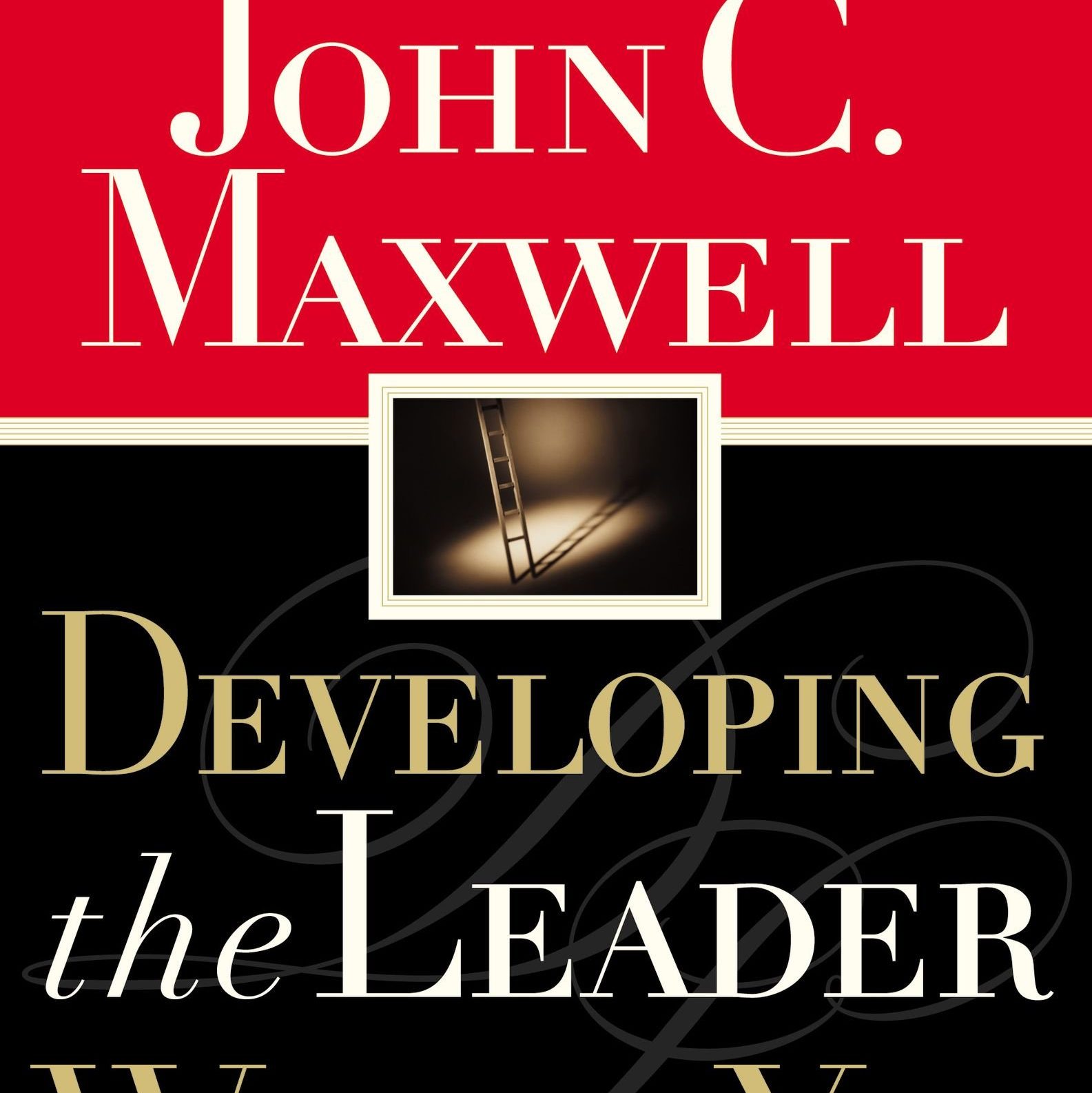
Over the course of our lives, each of us exerts influence over many people in our daily interacitions. This means that each one of us is a leader without even realising it. Developing the Leader Within You 2.0 will help you understand the dynamics of leadership, and will teach you how to gain other people’s trust, which is an invaluable skill for developing useful professional and personal attributes.
Key Ideas:
- communication, recognition, and influence are the three components of Robert Dilenschneider’s so-called “power triangle”
We all know that the combination of experience and seniority does not necessarily make for a good leader, and yet, while this might not be such a widely acknowledged notion, we must remember that a person is not able to become a good leader without it.
Recognition is one of the fundamental of power, as is the abilitu to communicate effectively. The third componenet of the “power triangle”, is the ability to exert influence, a factor that merits further exploration, if you truly want to understand what leadership is.
Everyone had the ability to be a good leader. So, in every circumstance, even the simplest, the question you need to be asking is: who is the person influencing the group’s behaviour? who is everyone looking to for answers on what they should be doing?
Leadership is like maturity. It doesn’t automaticaly come with age
Jhon Wooden
2. Acquiring influece means climbing the leadership ladder, which consists of 5 levels: it begins with people following you because they have to, and ends with you being followed because of who you are.
When we are effective communicators, both in terms of ourselves and our ideas, we elicit a positive response from the people we are trying to influence. This triggers a kind of virtuous circle: the more others think that waht we are doing is right an done correctly, the more our influence will grow, leading us to be perceived as true leaders: competent, effective, respectful, consequently, powerful.
3. A good leader knows that to be successful, they need to choose what to channel their energy into, and that priorities must be recognised before they become urgent.
The Pareto principle, also known as the 80/20 rule, explains very well how too, often, importance is given to things that do not deserve it. This principle states that 80% off consequences come from 20% of causes. Leaders need to ask themselves “who and what will fill my calendar”, rtaher than put themselves in a position where they find themselves saying, ” my calendar is too full”.
The Pareto principle does not only apply to managing tasks: in the hands of a good leader, it is also an excellent tool for managing people, because it allows you to use the time and attention that you dedicate to them in the most effective way.
We all live under the same sky but we don’t all have the same horizon.
Konrad Adenaue
4. The value of a leader is expressed and measured in their ability to communicate their vission, and generate positive change.
As a leader you need to be able to see the bigger picture, before anyone else, and know how to convey what you see to the people around you. Therefore, vision is essential to leadership. Without it, a team’s energy decreases, people start to miss deadlines, and individual priorities are put before those of the team. Having a vision is not enough on it own, leadership is the ability to transform it into reality by producing positive change.
More about Jhon Maxwell book, Here:
 mybespokes.com