
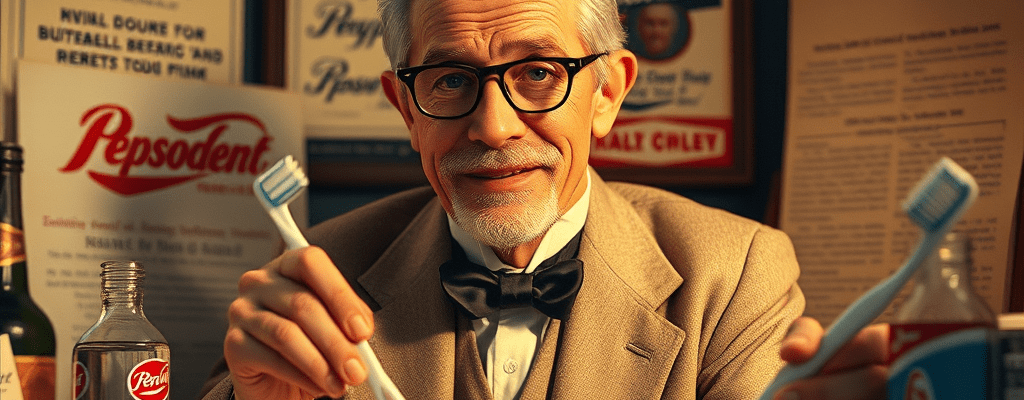
Claude Hopkins, a marketing pioneer, masterfully used a clever ad campaign that subtly made people self-conscious about their teeth, sparking a widespread concern about that unseen “film.” While he knew this would convert some into regular toothbrushes, his ambition was to create a true sensation.
Hopkins understood a crucial hurdle: convincing someone they needed Pepsodent was different from motivating them to buy it now. Life’s distractions – thoughts of hair, makeup, or home decor – would easily overshadow the intention to purchase later. The “someday” order would likely never materialize.

His ingenious solution wasn’t to aggressively push for immediate sales, but to guide potential customers through a small, initial step. He pondered: what if the ad itself could linger in their environment, continuing to nudge them towards a purchase long after they’d finished reading the magazine?
This led to an experiment with calls to action. Phrases like “Pin this up!” or “Don’t forget!” felt forced and ineffective. People resist direct commands. But what if he offered something genuinely valuable in exchange for a simple action – cutting out a corner of the ad and mailing it in for a free tube of toothpaste? This irresistible offer would prompt immediate physical engagement, a small commitment that moved them closer to becoming a Pepsodent user.
The results were astounding. Within three weeks, Pepsodent was overwhelmed by free sample requests. Within years, over half of Americans had adopted regular toothbrushing. Pepsodent became a global brand, and Hopkins’s methods revolutionized advertising.
Marketing experts have long analyzed this campaign, and Hopkins himself revealed his strategies in Scientific Advertising. Let’s examine his key insights for aspiring marketers:
Minimize Risk: Play it Safe to Win Big
Hopkins advocated for minimizing the potential for failure over maximizing immediate profits. He likened pushing a hard sell for a new habit to “selling shaving cream to bearded men.” Even if your ultimate goal is significant behavioral change, your initial advertising should aim for achievable, guaranteed sales.

As Hopkins wisely noted, a successful ad can yield immense profits, while a misstep should result in only a minor loss. He understood that asking consumers to adopt a new behavior, no matter how simple, can be a barrier. Therefore, he strategically positioned Pepsodent as a beauty aid, a more readily accepted desire than committing to a long-term hygiene practice. This approach lowered the perceived risk for the consumer.
One Step at a Time: Guide, Don’t Demand
Many novice marketers expect immediate conversions after an ad exposure. Hopkins’s brilliance lay in understanding the power of incremental engagement. The likelihood of an immediate purchase from a first-time encounter with your brand is slim. If your ad solely focuses on a direct sale, you’ll likely lose the majority of your audience.
Instead, assume your audience isn’t ready to buy. Encourage a small, risk-free action: clip a coupon, bookmark a link, follow a social media account. What simple, harmless action can you prompt immediately after someone sees your ad? This gentle progression builds familiarity and trust.
Be Radical (in your Generosity): Self-Interest is Key
“Remember the people you address are selfish,” Hopkins astutely pointed out. “They care nothing about your interests or your profit. They seek service for themselves.” Ignoring this fundamental truth is a costly advertising error.
Consumers are discerning. They recognize the difference between a truly free offer and a disguised sales pitch. Hopkins championed seemingly altruistic offers rooted in understanding human nature. He argued that pushing for a sale too aggressively can backfire, portraying your business as solely profit-driven. He criticized being “penny-wise,” lamenting that charging even a small amount for a sample or requiring postage could deter potential customers.
While the 100% risk-free trial Hopkins pioneered is now commonplace, the core principle remains vital: what genuinely generous offer can you make that convinces customers you prioritize their interests?
Hopkins’s success wasn’t about a secret brainwashing technique. His principles were surprisingly straightforward: guide customers gradually, avoid aggressive sales tactics, and genuinely prioritize their needs. It boils down to a fundamental principle: market to others as you would want them to market to you.
” The customer’s perception is your reality.” – Kate Zabriskie
Perhaps this is why Hopkins dismissed the notion of an overnight success formula. His advice remains timeless: “Never be led in new paths by the blind. Apply to your advertising ordinary common sense.”
 mybespokes.com